
A practical overview of smart lock PCBA development, covering project inputs, circuit architecture, prototype verification, functional testing and production handover.
Smart lock PCBA development starts with a complete requirement brief
Smart lock PCBA development should begin with the complete access scenario rather than an isolated list of electronic parts. The development team needs the required unlocking methods, lock-body interface, motor load, battery architecture, display or camera functions, wireless protocol, app platform and target operating environment.
Clear ownership of firmware, cloud or app integration, test fixtures and certification support should also be agreed before schematic work begins. This reduces redesign when the mechanical, electronic and software workstreams converge.
Architecture and component selection must support the final product
The controller, wireless module, memory, biometric interface, motor driver and power-management design must be selected as one system. Engineers should review standby current, peak motor demand, antenna placement, connector reliability, available PCB area and the supply continuity of critical components.
A module name alone does not define product capability. Firmware maturity, radio performance, security functions, ecosystem requirements and lifecycle availability all affect whether a platform is suitable for volume production.
Prototype verification and PCBA functional testing
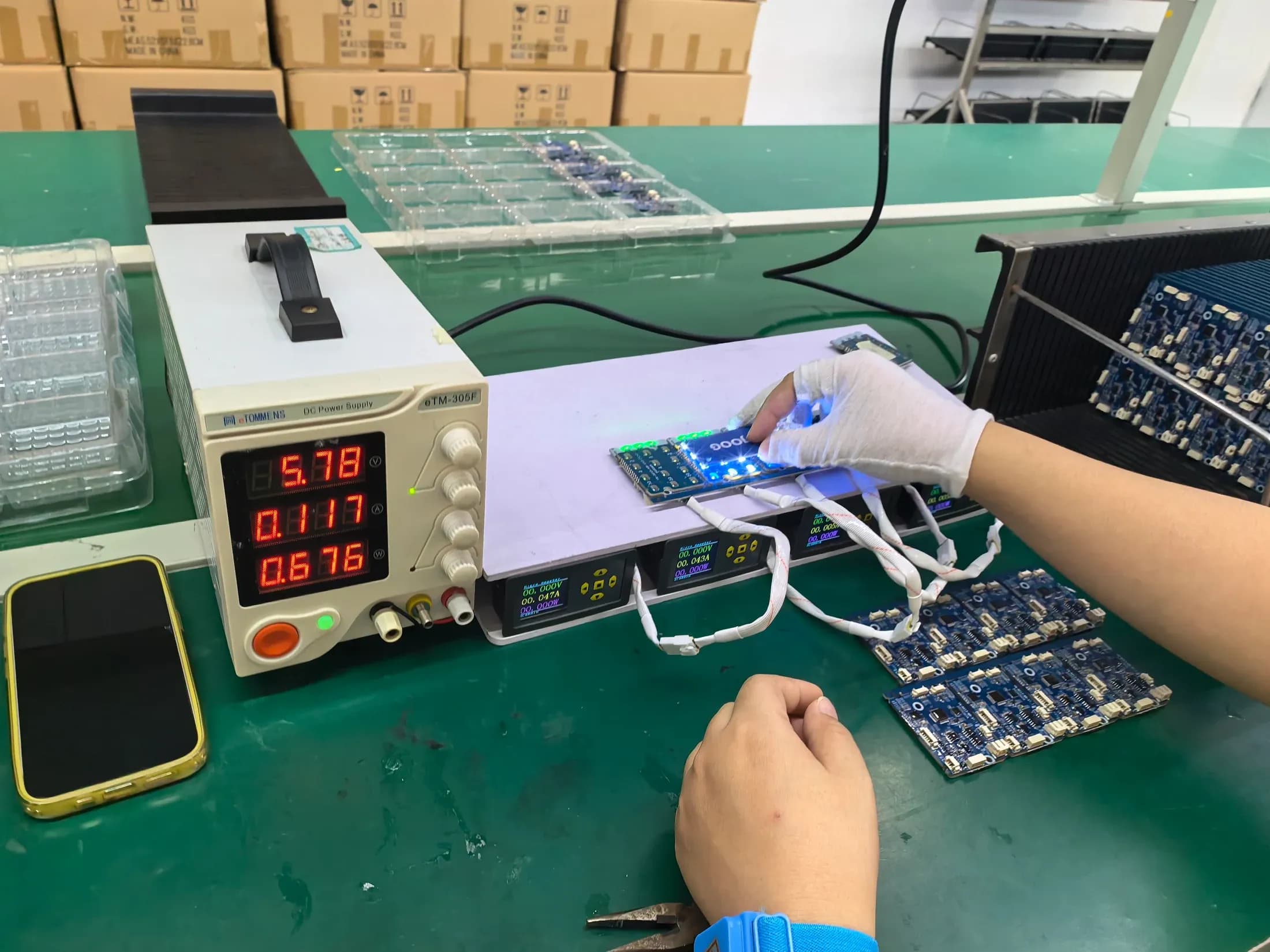
Engineering samples should verify power rails, motor control, sensor inputs, keypad or display operation, credential interfaces, wireless communication and abnormal-condition recovery. Current consumption and low-battery behavior require particular attention because access reliability depends on predictable power management.
Functional testing should use an approved test specification with traceable pass criteria. Results from board-level testing, lock-assembly testing and door-simulation testing should be reviewed together before a design is released for a pilot run.
What buyers should provide before requesting a PCBA quotation
A useful RFQ includes the product concept, target market, required credentials, wireless ecosystem, motor and lock-body information, expected annual volume, compliance destination, tooling boundary and responsibility for firmware and apps.
YOUNUO IET uses this information to evaluate development scope, technical risks, sample stages and the evidence needed before production handover. Final specifications and validation plans are confirmed project by project.